【Webinar】Supporting Creative Learning for Neurodiverse Children|ニューロダイバースな子どもたちの創造的な学びを支える
*English follows Japanese
イベント概要:
開催時刻:
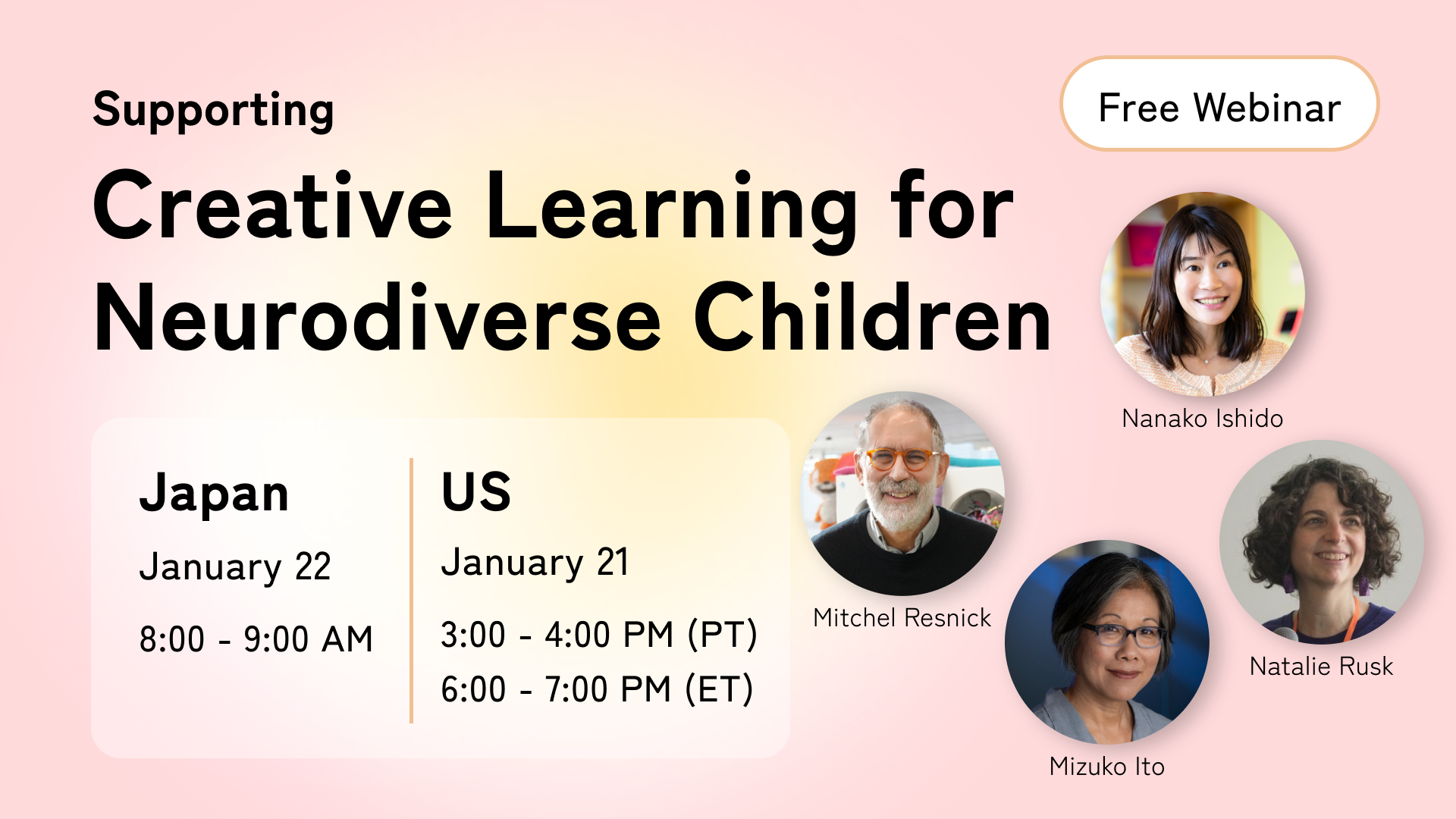
日本時間:2026年1月22日(木)午前8時〜9時(JST)
米国太平洋時間:2026年1月21日(水)午後3時〜4時(PT)
米国東部時間:2026年1月21日(水)午後6時〜7時(ET)
形式:オンライン(Zoomミーティング)
参加費:無料
使用言語:英語 / 日本語
プレゼンター:ナタリー・ラスク、ミッチェル・レズニック、石戸奈々子、伊藤瑞子
探究的で創造的な学びを支える環境やテクノロジーは、長年にわたり神経多様性のある子どもたちにとって大切な居場所となってきました。近年のコンピュータ技術やインタラクティブ技術の発展により、多様な認知特性やコミュニケーションの強みを生かした学習体験を支援できるだけでなく、誰もが利用しやすい創作ツールや交流の場を提供することが可能になっています。
本ウェビナーでは、MITメディアラボの Lifelong Kindergarten 研究グループからミッチ・レズニックさんとナタリー・ラスクさんを迎え、テクノロジー、神経多様性、そして学習の分野で先駆的な研究者であり変革者でもある石戸奈々子さんとの対話を行います。彼らは、子どもたちが自らインタラクティブな物語やアニメーション、ゲームを制作し、温かく協力的なオンラインコミュニティで共有できるクリエイティブ・コーディングツール「Scratch」など、インクルーシブな技術の開発を主導してきました。
また、石戸さんは、日本にクリエイティブ・コンピューティングのアプローチを広め、神経多様性のある学習者を支えるテクノロジーを推進してきた第一人者です。
本セッションでは、創造性とテクノロジーに富んだ学びの環境を育むうえで、神経多様性を包摂するアプローチを実践してきた経験、課題、そして成果を共有します。
ミッチェル・レズニックは、MITメディアラボにおいて学習研究の教授であり、Lifelong Kindergarten研究グループのディレクターを務めています。ミッチはMITでコンピュータサイエンスの修士号と博士号を取得しており、著書『Lifelong Kindergarten』の著者でもあります。
ナタリー・ラスクは、MITメディアラボの Lifelong Kindergarten グループに所属するリサーチサイエンティストです。ナタリーは、ハーバード大学で教育学の修士号、そしてタフツ大学で児童発達学の博士号を取得しています。
ミッチとナタリーは30年以上にわたり、多様な背景を持つ若者が創造的な学習体験に参加する機会を広げるための新しいテクノロジーのデザインと研究に取り組んできました。彼らは、世界で最も広く使われている子ども向けコーディングプラットフォーム「Scratch」、そしてモバイルデバイスを使って創造的に自己表現できる新しいコーディングアプリ「OctoStudio」の開発において協働しました。また、周縁化されたコミュニティの若者を対象とした放課後学習センターの、世界150拠点に広がるネットワークであるComputer Clubhouseプロジェクトを共同設立しています。
石戸奈々子は、慶應義塾大学大学院メディアデザイン研究科 教授、またB Labのディレクターです。 東京大学工学部卒業後、マサチューセッツ工科大学メディアラボ客員研究員を経て、NPO法人CANVAS、一般社団法人超教育協会等を設立、代表に就任。株式会社松屋、株式会社フジ・メディア・ホールディングス、株式会社デジタルガレージの社外取締役。ニューロダイバーシティプロジェクト主宰。総務省情報通信審議会委員など省庁の委員やNHK中央放送番組審議会委員を歴任しました。デジタルサイネージコンソーシアム理事等を兼任。政策・メディア博士です。
伊藤瑞子は文化人類学者・学習科学者で、30年以上にわたり日本と米国におけるデジタル若者文化および興味駆動型・社会的に接続された学びを研究してきました。Connected Learning Research Networkのリーダーであり、カリフォルニア大学アーバイン校のConnected Learning Lab所長。MinecraftやRobloxといったプラットフォームを用いたプロジェクトベースの学習体験を提供するNPO「Connected Camps」の共同創設者です。
イベント参加までの流れ:
研究会への参加を申し込む(申込みはこちらから)
研究会参加後に案内されるイベント申込みリンクより、参加申し込みを行う
イベント開催時刻にURLをクリックして参加する
🇬🇧 EnglishEvent details:
Date and Time:
Japan Standard Time: Thursday, January 22nd, 2026, 8:00 AM - 9:00 AM (JST)
Pacific Time: Wednesday, January 21st, 2026, 3:00 PM – 4:00 PM (PT)
Eastern Time: Wednesday, January 21st, 2026, 6:00 PM – 7:00 PM (ET)
Format: Online (Zoom meeting)
Fee: Free
Language: English / Japanese
Presenters: Natalie Rusk, Mitchel Resnick, Nanako Ishido and Mizuko (Mimi) Ito
Environments and technologies that support young people in exploratory and creative learning have long been havens for neurodivergent children. Fueled by new computational and interactive capabilities, emerging technologies can support learning experiences tailored to diverse cognitive and communication strengths, as well as offering accessible and inclusive creation and networking tools. This webinar brings together Mitch Resnick and Natalie Rusk from the Lifelong Kindergarten research group at the MIT Media Lab, in conversation with Nanako Ishido, a leading scholar and changemaker in technology, neurodiversity, and learning. Professor Resnick and Rusk have led the development of inclusive technologies including Scratch, a creative coding tool that enables children with diverse interests and backgrounds to create their own interactive stories, animations, and games, and share their creations with one another in a friendly and supportive online community. Professor Ishido has been the leading figure in bringing creative computing approaches to Japan and championing technologies that support neurodivergent learners. They will share their experiences, challenges, and successes in supporting neurodiversity inclusive approaches to fostering creative and technology rich learning environments.
Mitchel Resnick is Professor of Learning Research and Director of the Lifelong Kindergarten research group at the MIT Media Lab. Mitch has Masters and PhD degrees in computer science from MIT, and he is author of the book Lifelong Kindergarten.
Natalie Rusk is Research Scientist with the Lifelong Kindergarten group. Natalie has a Masters degree in education from Harvard University and a PhD degree in child development from Tufts University.
Mitch and Natalie have collaborated for more than 30 years on the design and study of new technologies to expand opportunities for young people from diverse backgrounds to engage in creative learning experiences. They collaborated on the development of Scratch, the world’s most popular coding platform for children, and OctoStudio, a new coding app that enables young people to express themselves creatively with mobile devices. They also co-founded the Computer Clubhouse project, which has grown into a global network of 150 after-school learning centers for youth from marginalized communities.
Nanako Ishido is Professor, Keio University Graduate School of Media Design and Director, B Lab. After graduating from the School of Engineering at the University of Tokyo, Nanako served as a visiting researcher at the MIT Media Lab. She went on to found organizations such as the NPO CANVAS and the Cross-ministerial Association for Education Technology, serving as their representative director. She currently serves as an outside board member of Matsuya Co., Ltd., Fuji Media Holdings, Inc., and Digital Garage, Inc., and leads the Neurodiversity Project. She has held numerous government and public positions, including membership on the Ministry of Internal Affairs and Communications’ Information and Communications Council and the NHK Central Program Council. She also concurrently serves as a director of the Digital Signage Consortium. She holds a Ph.D. in Policy and Media.
Mizuko (Mimi) Ito is a cultural anthropologist and learning scientist, who has studied digital youth culture and interest-driven, socially connected learning in Japan and the U.S for over thirty years. She led the Connected Learning Research Network, directs the Connected Learning Lab at the University of California, Irvine and is co-founder of Connected Camps, a non-profit offering social, project-based learning experiences in platforms such as Minecraft and Roblox.
Steps to join this event:
Apply to participate in our study group. (Click here to apply)
After joining the study group, register for the event using the link provided.
On the day of the event, click the event URL at the scheduled time to join.